Magnesium glycinate vs citrate for sleep: which form, and how much?
Same mineral, very different evenings. Why the form on the label matters, what 'elemental' means, and why we chose bisglycinate at 250 mg.
The short version
- For evenings, glycinate (bisglycinate) is the gentle choice. Citrate is more likely to send you to the bathroom.
- Look for the elemental amount: the magnesium itself, not the weight of the whole compound.
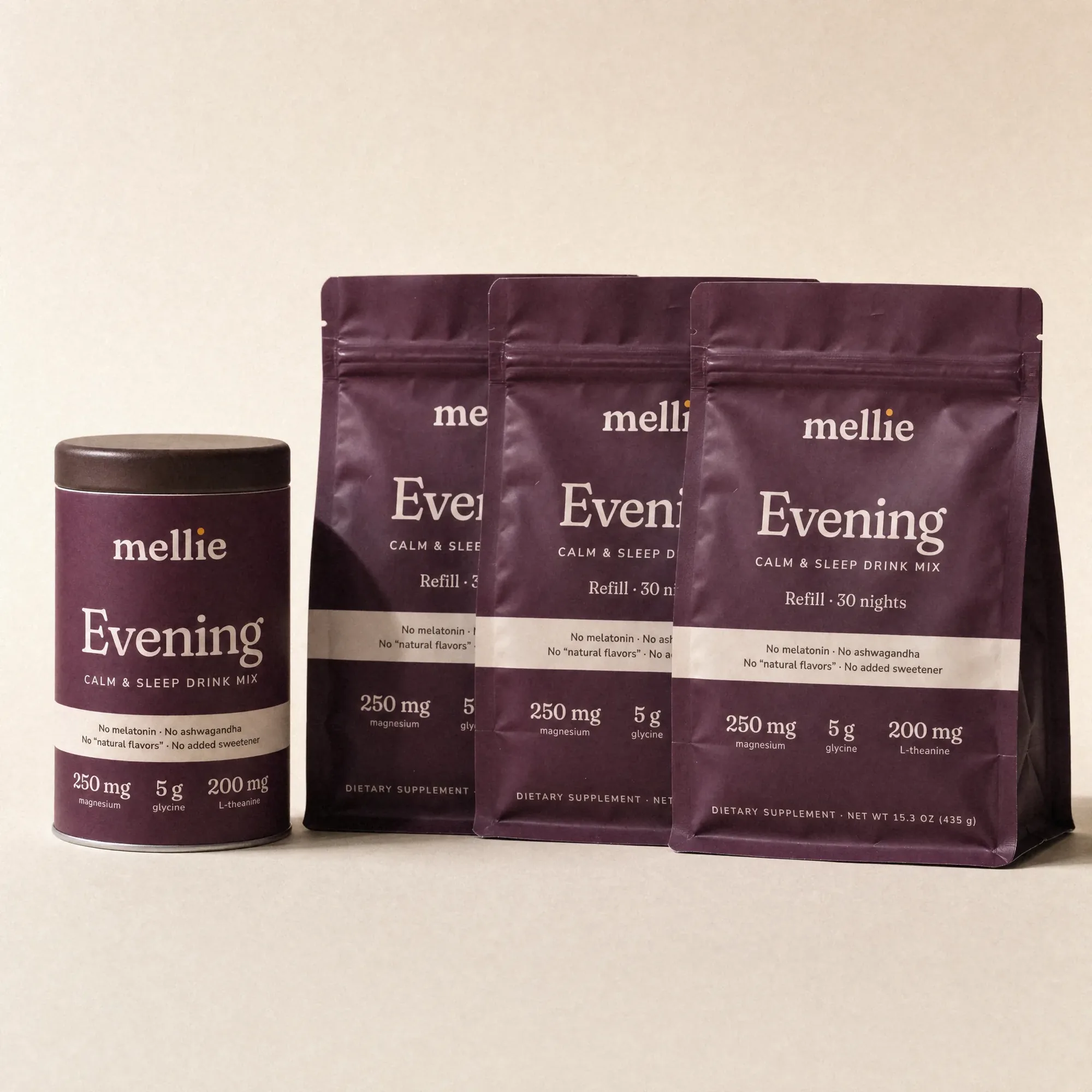
- The US upper limit for magnesium from supplements is 350 mg a day for adults. Evening has 250 mg.
- The evidence for magnesium and sleep is promising but modest. Think weeks, not tonight.
Why the form matters
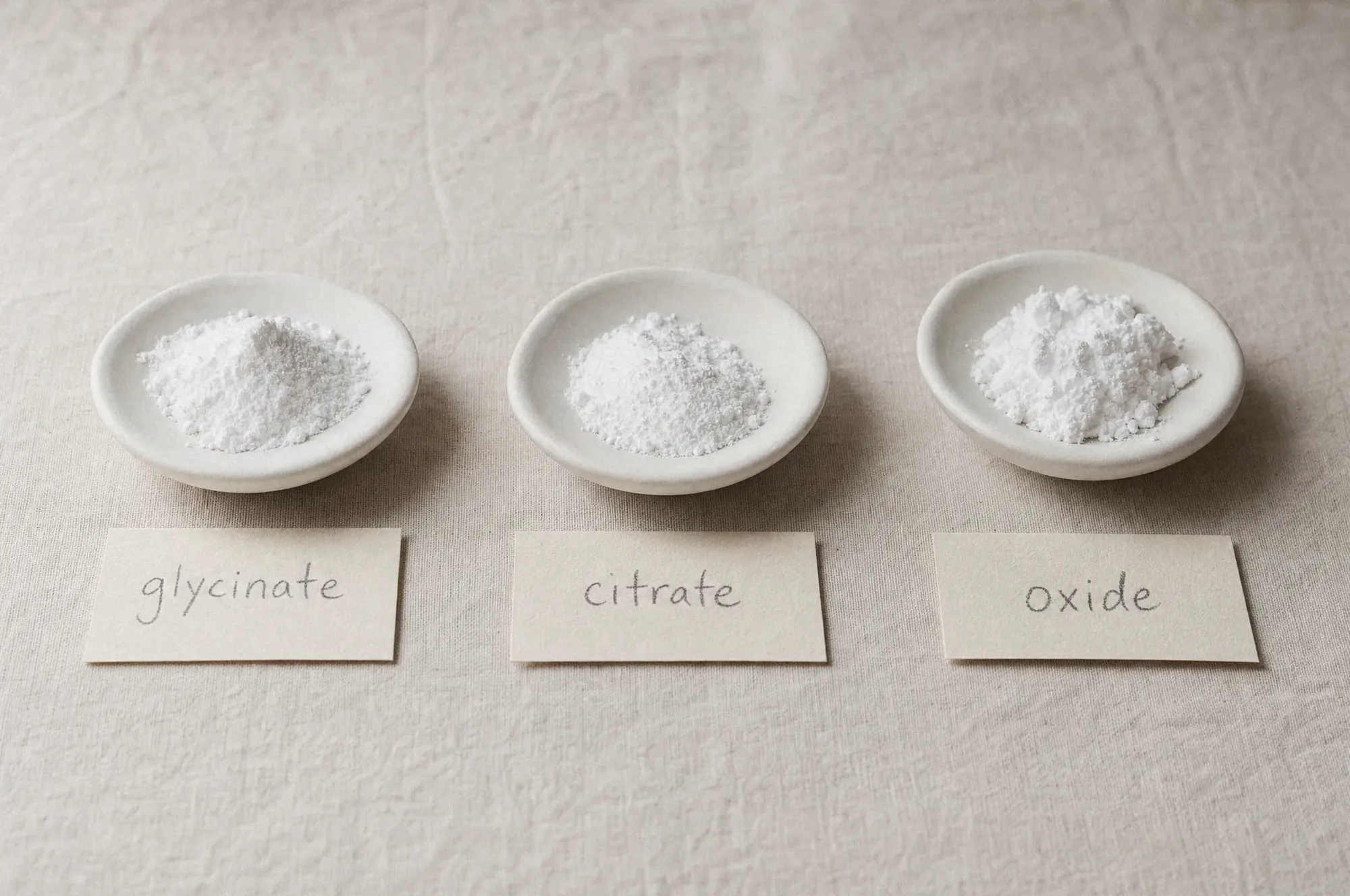
Magnesium never travels alone. On a label it is always bound to something: glycine, citric acid, oxygen. That partner changes how well it's absorbed, how it tastes, and how your stomach takes it.
| Form | Gentle on the stomach? | Best known for |
|---|---|---|
| Bisglycinate (glycinate) | Yes, very | Evenings and everyday use |
| Citrate | Less so, can loosen stools | Constipation, budget blends |
| Oxide | Often not | High numbers on cheap labels, poorly absorbed |
| Threonate | Generally | Marketed for the brain; costly, little sleep data |
Read the elemental amount, not the compound
Here is where labels get slippery. "Magnesium glycinate 1,000 mg" might deliver only about 140 mg of actual magnesium, because most of that weight is the glycine partner. The number that matters is the elemental magnesium.
How much magnesium for sleep?
The US tolerable upper limit for magnesium from supplements is 350 mg a day for adults. Food doesn't count toward it. Most sleep studies used doses in the low hundreds of milligrams, taken over several weeks.
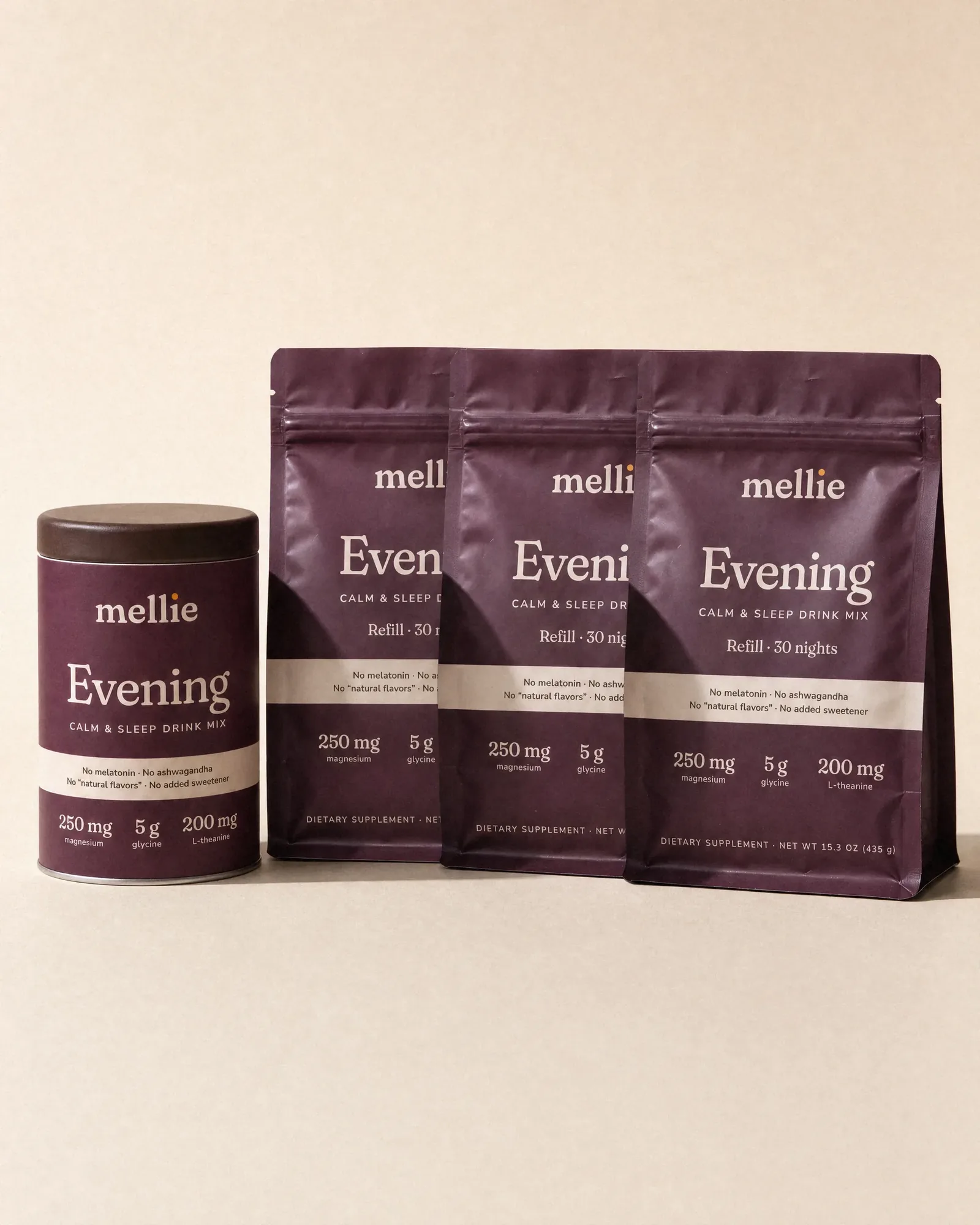
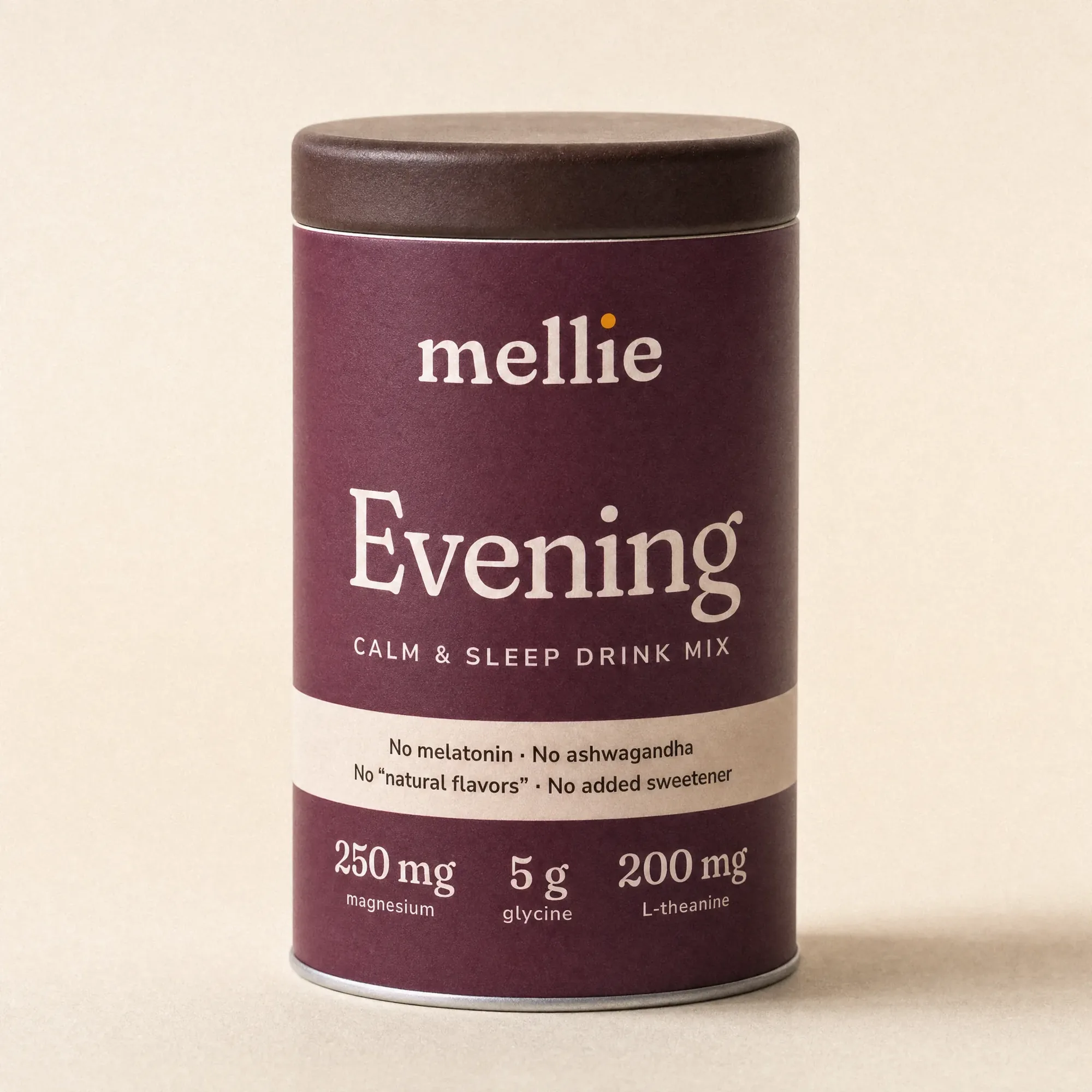
We chose 250 mg: a studied range, clean on the palate, and room left for a multivitamin. More is not better here. Too much magnesium mostly shows up as a stomach that disagrees.
Who should check first
- Anyone with kidney disease: magnesium clears more slowly.
- Anyone on thyroid medicine, bone medicine or certain antibiotics: timing matters. See our medication guide.
- Anyone on blood-pressure medicine: magnesium may lower blood pressure slightly. Ask your doctor.
Questions women ask
- Is magnesium glycinate the same as bisglycinate?
- Bisglycinate is the more precise name: one magnesium bound to two glycines. Most labels use the words interchangeably.
- Can I take magnesium every night?
- For most healthy adults, a moderate dose under the 350 mg supplement limit is fine nightly. Check with your doctor if you have kidney disease or take medication.
- When should I take magnesium for sleep?
- In the evening, an hour or so before bed, is common. Consistency over weeks matters more than the exact minute.
Sources (3)
Placeholder list, verified at medical review before publishing.
- NIH Office of Dietary Supplements. Magnesium: Fact Sheet for Health Professionals.
- Schuette SA, et al. Bioavailability of magnesium diglycinate vs magnesium oxide. Journal of Parenteral and Enteral Nutrition, 1994.
- Arab A, et al. The role of magnesium in sleep health: a systematic review of available literature. Biological Trace Element Research, 2023.
Template article, pending medical review. It is general reading, not medical advice. Talk to your doctor or pharmacist before starting a supplement, especially if you take medication, have kidney disease, or are pregnant or breastfeeding.
All articles